In Madrid, the rhythm of the city isn’t set by a clock; it’s set by the roar of the crowd.
As we approach June 2026, the energy in the streets of Barrio de Salamanca is already shifting. With the World Cup kicking off, Madrid is transforming. But here’s the thing most guidebooks won’t tell you: in Spain, football isn’t just entertainment. It is a social shortcut.
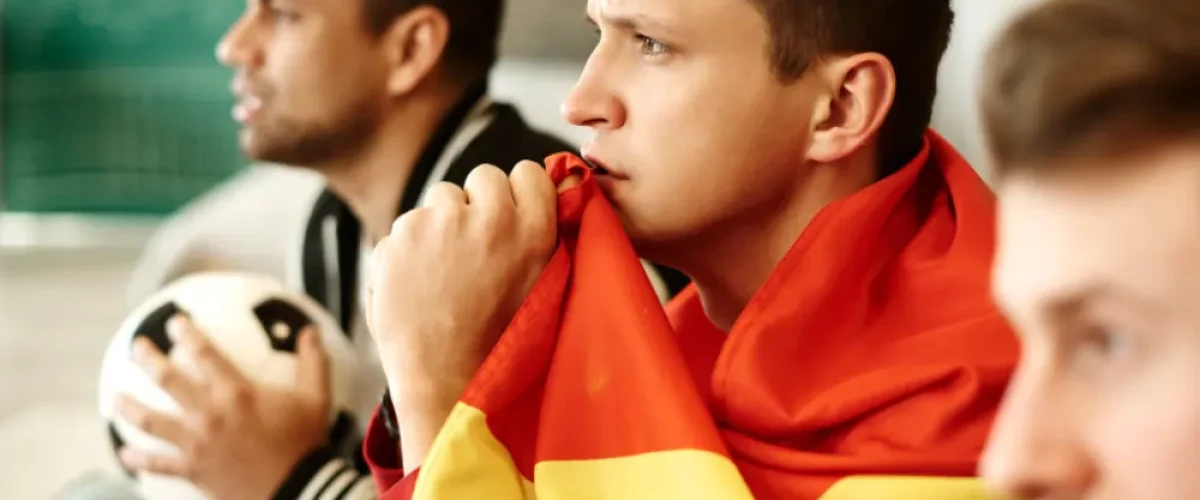
1. “La Roja”: More Than a Color, a New Identity
If you’ve heard the term “La Roja” and thought it was just a description of the jersey, you’re missing the heart of the story.
Before 2004, the Spanish team was known as “La Furia Española”, a name born in the 1920s that emphasized grit and struggle. It wasn’t until Luis Aragonés, the legendary “Sabio de Hortaleza,” decided the team needed a brand. a recognizable identity like Brazil’s Canarinha. He coined “La Roja” to unite the country under a single, simple banner of passion.

Why this matters for you: When you refer to the team as La Roja, you aren’t just using a nickname; you are participating in a modern tradition of unity that helped Spain conquer the world.
2. The Vocabulary of the “Third Time”
At LAE Madrid, we teach the Communicative Approach. In Spanish football culture, the most important part of the match isn’t the 90 minutes on the pitch, it’s the “Third Time” (el tercer tiempo).
This is where language lives. It’s the coffee machine at work on Monday morning where colleagues dissect referee calls, or the bar counter where you’ll hear idioms like:
- “Echar balones fuera”: To dodge a question or shift responsibility (literally: to kick the balls out of play).
- “Sudar la camiseta”: To work incredibly hard and show true commitment (literally: to sweat the shirt).
3. Finding Your “Peña” and Your Pitch
For expats, football is the fastest way to bridge the gap from “stranger” to “neighbor.”
- Join a “Peña”: These are supporter clubs where loyalty becomes community. Being part of a Peña means you belong to something bigger; you’ll be invited to stadium trips and local dinners.
- Play the Game: You don’t need to be a pro. Platforms like CeleBreak have revolutionized amateur football in Madrid. Whether it’s a quick pick-up game in Retiro or a competitive match in Sainz de Baranda, these fields are “linguistic campuses” where you learn Spanish through action.
- The Real Madrid Connection: Even the Real Madrid Foundation recognizes this link, running bilingual immersion campuses that combine high-intensity training with values like respect and teamwork, the same values we champion in our classrooms.

4. “Podemos”: The Language of Hope
During the World Cup, you will hear the word “Podemos” (We can) everywhere. While it’s now associated with politics, its modern social power was born in 2008 as a sporting mantra. It represents the collective belief of a city and a nation. Understanding these “emotional anchors” in Spanish conversation is what moves you from just living in Madrid to feeling Madrid.
Your Seat at the Table (and the Bar)
This June, Madrid will be a melting pot of cultures. At LAE Madrid, we aren’t just a school; we’re your home away from home. We help you decode the slang, understand the historical rivalries, and find your voice in the roar of the 2026 World Cup.
Don’t just be a spectator this summer. Be a part of the conversation.
🏆 Don’t Miss a Single Goal!
The World Cup 2026 is the biggest sporting event in history, and Madrid is the best place to experience it. But between the time differences and the local lingo, it’s easy to feel overwhelmed.
Download our FREE World Cup 2026 Guide for Expats!
Inside, you’ll find:
- 📅 The Complete Match Calendar: Tailored to Madrid local time.
- 🧠 Spanish “Fun Facts”: Impress your neighbors with the history of La Roja.
- 🗣️ The Ultimate Bar Cheat Sheet: Key phrases to help you order, cheer, and argue like a true Madrileño.
Ready to find your belonging in Madrid? Our courses are designed to get you speaking from day one. Join the LAE family and start living the language.