Madrid in August:
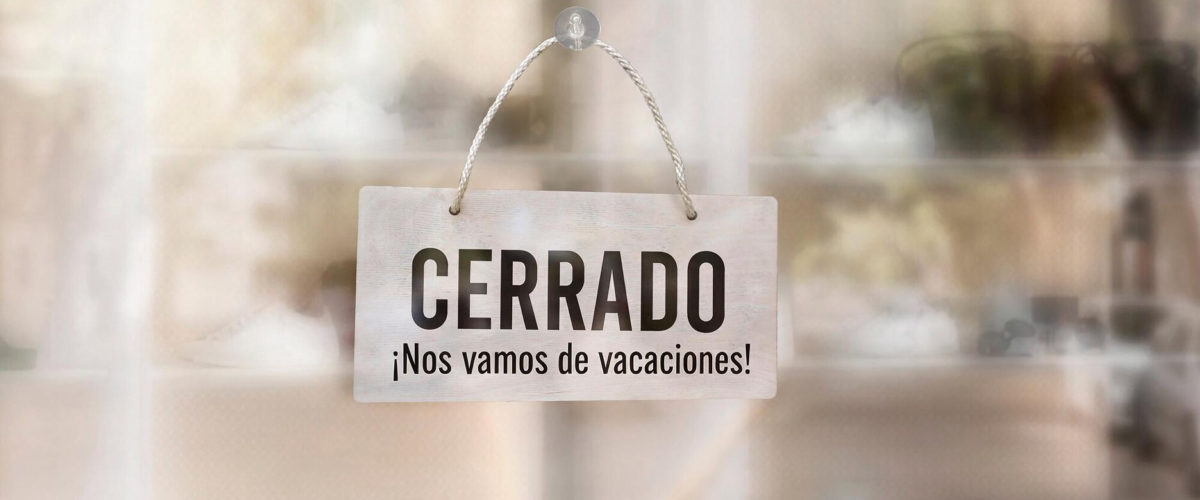
At 1:30 pm, you arrive at a neighbourhood café and find a handwritten sign on the door:
Cerrado por vacaciones. Volvemos el 24 de agosto.
Later that evening, you walk through Lavapiés and find music in the plaza, colourful decorations above the street and more people outside than you have seen all afternoon.
That is Madrid in August.
The city has not disappeared. It has changed rhythm.
Some businesses close or reduce their hours. Some neighbourhoods become quieter. The heat changes when people walk, meet and eat. At the same time, Madrid’s traditional street fiestas, summer cultural programmes, outdoor cinemas and public pools give you plenty of reasons to leave the house.

Opinions about August in Madrid are famously divided. In the Reddit discussion that inspired this article, some contributors describe the heat and closures as major disadvantages. Others enjoy the calmer streets, evening atmosphere and reduced crowds. The most sensible conclusion is that Madrid can be very enjoyable in August—but you need to work with the weather and check practical details rather than expecting the city to operate exactly as it does in October.
For Spanish learners, that change of rhythm creates something useful: new reasons to read, ask, clarify and participate.
Here are eight small challenges that turn August into part of your Spanish learning.
Challenge 1: Understand the Sign Before Opening Google Maps
One of the most useful pieces of Spanish you will learn in August may be written on a sheet of paper taped to a door.
You might see:
- Cerrado por vacaciones — Closed for holidays
- Volvemos el… — We reopen on…
- Horario de verano — Summer opening hours
- Horario reducido — Reduced opening hours
- Solo con cita previa — By appointment only
- Cerrado por descanso — Closed for a break
Some independent businesses close for part of August, while others continue with shorter or altered hours. Experiences vary by area: anecdotal reports suggest residential neighbourhoods may feel the change more than central, visitor-focused streets. The important lesson is not to assume that every shop closes—or that every online timetable is current.
Your Spanish challenge
Before visiting one café, restaurant, salon, shop or service, confirm its current hours in Spanish.
Try:
- ¿Abrís en agosto? — Are you open in August?
- ¿Tenéis horario de verano? — Do you have summer opening hours?
- ¿Estáis abiertos esta tarde? — Are you open this afternoon?
- ¿Cuándo volvéis a abrir? — When do you reopen?
- ¿Hace falta reservar? — Do we need to book?
Do not worry about producing a long conversation. Your objective is to ask a real question and understand enough of the answer to make a decision.
That is practical Spanish doing a real job.
Challenge 2: Build Your Day Around the Heat
Madrid in August is not the month for proving how long you can walk in direct sunshine.
AEMET’s climate normals for Madrid Retiro show an average August daily maximum of 31.3°C. Individual days and heat episodes can be hotter, so current forecasts and official warnings matter more than the monthly average when planning a particular day.
The most comfortable approach is usually to divide your day into three parts.
Morning: Move
Use the earlier hours for walks, markets, errands and outdoor activities.
This is a good time to complete practical tasks in Spanish: collect a parcel, buy something for your flat, ask for directions or speak to somebody at a reception desk.
Middle of the Day: Go Indoors or Slow Down
Use the hottest hours for class, lunch, work, reading, a museum or rest.
The Spanish Sabores guide recommends a similar split-day rhythm: start early, slow down during the strongest heat and return outside later. The article itself was last updated in 2020, so its individual venue recommendations should be rechecked, but the general planning principle remains useful.
Evening: Rejoin the City
Once the strongest sun has passed, choose a park, neighbourhood walk, cultural activity or relaxed dinner.
Your Spanish challenge
Ask for something that makes the heat more manageable:
- ¿Hay una mesa a la sombra? — Is there a table in the shade?
- ¿Funciona el aire acondicionado? — Is the air conditioning working?
- ¿Hay una fuente cerca? — Is there a drinking fountain nearby?
- ¿Dónde puedo rellenar la botella? — Where can I refill my bottle?
- ¿Podemos sentarnos dentro? — Can we sit inside?
- ¿A qué hora refresca un poco? — What time does it cool down a little?
Spanish practice does not have to be dramatic. Sometimes it is simply asking for shade.
Challenge 3: Experience a Madrid Verbena with Context
The first half of August brings three traditional neighbourhood fiestas to some of Madrid’s most historic districts.
In 2026, the official Madrid Tourism calendar lists:
- San Cayetano: 4–7 August, around Rastro and Embajadores
- San Lorenzo: 8–11 August, in Lavapiés
- La Paloma: 13–16 August, around La Latina
The programmes include combinations of live music, traditional dancing, competitions, food, children’s activities and religious ceremonies. Streets and balconies are decorated with flowers, garlands and mantones de Manila, while the chotis and traditional Madrid dress connect the celebrations to the city’s history.

These fiestas are not merely entertainment installed for visitors. They are community celebrations rooted in the neighbourhoods that host them.
Join with curiosity. Read the programme. Notice what is happening. Ask before taking a close photograph of an identifiable person, and avoid treating local residents as performers or language-practice props.
Useful fiesta vocabulary
- Verbena: A traditional open-air neighbourhood celebration
- Chotis: A dance associated with Madrid
- Chulapo / chulapa: A person wearing traditional Madrid dress
- Mantón de Manila: A decorative embroidered shawl
- Farolillos: Small decorative lanterns
- Pregón: The speech that formally opens a celebration
Your Spanish challenge
Ask one genuine question while you are there:
- ¿Qué se celebra hoy? — What is being celebrated today?
- ¿A qué hora empieza la música? — What time does the music start?
- ¿Dónde está el escenario principal? — Where is the main stage?
- ¿Esto es típico de Madrid? — Is this typical of Madrid?
- ¿Sabes dónde puedo ver el programa? — Do you know where I can see the programme?
- ¿Qué me recomiendas probar? — What do you recommend I try?
The following day, explain what you saw to a classmate in Spanish.
That second step turns an enjoyable evening into language learning.
Challenge 4: Choose a Cultural Activity from a Spanish Programme
Madrid’s summer cultural calendar continues throughout August.
In 2026, Veranos de la Villa runs from 7 July to 30 August, with 72 proposals distributed across 14 districts. Its programme includes music, dance, theatre, film, circus and other performances. Some activities are free, while others require tickets or advance booking, so the current programme should be checked before attending.
Instead of beginning with an English-language recommendation list, open the Spanish programme and make your own choice.
Your Spanish challenge
Find one activity by answering these questions:
- ¿Qué tipo de actividad es? — What kind of activity is it?
- ¿Dónde se celebra? — Where is it taking place?
- ¿A qué hora empieza? — What time does it start?
- ¿Es gratis o hay que comprar entrada? — Is it free, or do you need a ticket?
- ¿Hay que reservar? — Do you need to book?
At the venue, try:
- ¿Quedan entradas para esta noche? — Are there tickets left for tonight?
- ¿A qué hora abren las puertas? — What time do the doors open?
- ¿Dónde se recoge la entrada? — Where do we collect the ticket?
- ¿Puedo entrar con esta reserva? — Can I enter with this booking?
The aim is not to understand every word in the programme. It is to extract the information you need without immediately changing languages.
Challenge 5: Navigate a Municipal Pool in Spanish
Madrid may not have a beach, but its municipal outdoor pools are an important part of local summer life.
For the 2026 season, Madrid City Council lists 25 outdoor pools operating across the city, with the general season continuing until 6 September. Access arrangements, capacity and availability can vary by facility, so the city’s official sports platform or Madrid Móvil should be checked before travelling.
A public pool gives you a complete sequence of useful Spanish:
You check availability.
You choose a session.
You buy or confirm a ticket.
You find the changing room.
You ask about lockers.
You understand when you need to leave.
Your Spanish challenge
Handle the practical part without automatically switching to English:
- Quisiera una entrada para esta tarde. — I would like a ticket for this afternoon.
- ¿Quedan plazas? — Are there spaces left?
- ¿Dónde están los vestuarios? — Where are the changing rooms?
- ¿Hay taquillas? — Are there lockers?
- ¿Puedo pagar aquí? — Can I pay here?
- ¿A qué hora termina el turno? — What time does the session finish?
This is not glamorous Spanish.
It is the Spanish that makes you more independent.
Challenge 6: Turn a Museum Visit into a Language Workout
A museum is useful in August for two reasons.
First, it gives you an indoor plan during the hotter part of the day.
Second, it gives you something specific to talk about.
Instead of trying to understand every label in every room, choose one manageable task.
Before entering
Read the practical information in Spanish.
Look for:
- Horario — Opening hours
- Entrada general — General admission
- Entrada reducida — Reduced admission
- Exposición temporal — Temporary exhibition
- Último acceso — Last admission
- Aforo completo — Full capacity
Inside
Choose one room or one work.
Write down three repeated words.
Record a 30-second Spanish voice note describing what you noticed.
Before leaving
Ask one question:
- ¿Dónde empieza la exposición? — Where does the exhibition begin?
- ¿Se pueden hacer fotos? — Are photographs allowed?
- ¿Hay visita guiada en español? — Is there a guided visit in Spanish?
- ¿Esta sala está incluida en la entrada? — Is this room included in the ticket?
- ¿Tenéis audioguía? — Do you have an audio guide?
You do not need to give an academic lecture about Spanish art.
“I liked it because…” is a perfectly good place to begin.
Challenge 7: Use an Outdoor Cinema to Practise Opinions
Summer cinemas appear in different Madrid venues from late June into September, creating an evening alternative to staying indoors. Programmes, formats and venues change, so check the current official listing before choosing a film.
Films are useful for language learners because they give you a shared subject immediately.
You do not need to understand every line to participate in the conversation afterwards.
Before the film
Read the Spanish synopsis and predict what will happen.
During the film
Listen for three words or expressions you recognise.
After the film
Give a one-minute review:
- Me gustó porque… — I liked it because…
- No entendí del todo… — I did not completely understand…
- Mi personaje favorito fue… — My favourite character was…
- Lo que más me sorprendió fue… — What surprised me most was…
- El final me pareció… — I thought the ending was…
Your Spanish challenge
Ask your companion two follow-up questions before moving to another subject:
- ¿Qué te pareció? — What did you think?
- ¿Entendiste el final? — Did you understand the ending?
- ¿Cuál fue tu parte favorita? — What was your favourite part?
- ¿La recomendarías? — Would you recommend it?
The point is not to review the film perfectly.
The point is to stay in Spanish long enough to express a real opinion.
Challenge 8: Complete a Seven-Day August Spanish Streak
When normal routines disappear, Spanish can disappear with them.
Your usual café may close. A friend may leave Madrid. A regular language exchange may pause. You may start spending more time at home because of the heat.
Instead of waiting for September, create a small seven-day streak.
| Day | August Spanish mission |
|---|---|
| 1 | Read one summer-hours notice and explain it aloud in Spanish. |
| 2 | Ask whether a business is open before visiting. |
| 3 | Order something and ask one follow-up question. |
| 4 | Read part of an event programme in Spanish. |
| 5 | Ask for directions without opening your phone first. |
| 6 | Speak only Spanish with a classmate for 15 minutes. |
| 7 | Tell somebody about one thing you did during the week. |
Keep the missions small.
A challenge that takes five minutes and actually happens is more useful than an ambitious immersion plan you abandon after one day.
Do Not Turn People into Practice Material
Real-life Spanish practice should still feel like a real human interaction.
The waiter is working.
The person beside you at a fiesta may be talking to friends.
The neighbour walking a dog may not want a conversation.
Practise by participating naturally: asking questions you genuinely need answered, responding when somebody engages with you and recognising when an interaction is finished.
You can also reduce the pressure by practising with classmates. Visit a park, exhibition or cultural activity together and agree to use Spanish for a set amount of time.
The goal is not to collect conversations with strangers.
It is to become increasingly comfortable participating in the life already happening around you.
August Is Not a Pause in Your Spanish
Madrid in August teaches you to pay attention.
You read the sign before pulling the door.
You check the timetable before crossing the city.
You ask where the event is taking place.
You understand why the street is decorated.
You adjust your day instead of fighting the heat.
And slowly, Spanish becomes less like a subject you study and more like the language you use to make everyday decisions.
The city may be following a different timetable.
Your progress does not have to stop.
At LAE Madrid, structured classes give you the language, correction and progression that everyday exposure cannot provide on its own. Madrid then gives you genuine reasons to use what you have learned.
Ready to give your August Spanish more structure? Explore LAE Madrid’s Intensive Spanish Course and check current availability with the team. The course is currently listed on LAE’s live website; specific August places and timetable options should be confirmed before enrolment.
If August has made you realise that you want more structure in your Spanish, our new Spanish classes for complete beginners in Madrid are a great place to start. Designed for students with little or no previous Spanish, the course combines face-to-face lessons with guided online study, so you can build confidence step by step and start using Spanish in real situations from the beginning.