
The Reality of the Expat Experience
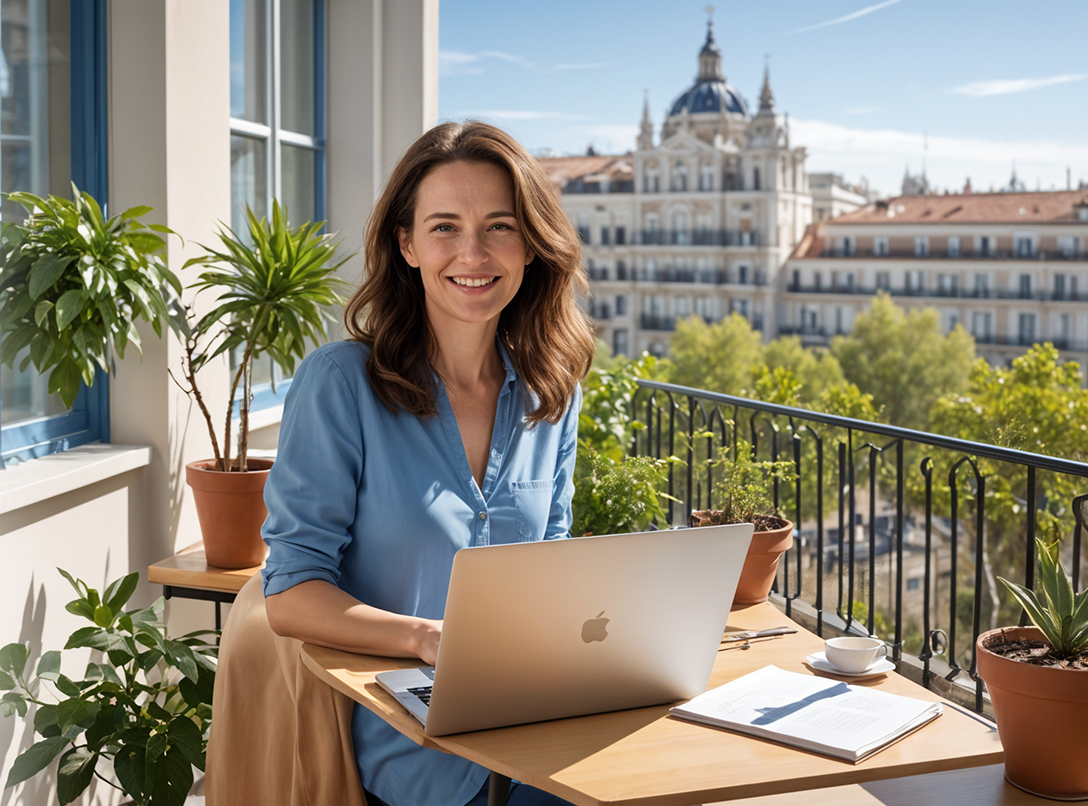
You did it. You moved to Madrid.
Or maybe you have been here for a year. Maybe two. You have figured out the metro, you know which supermarket stays open late, and you have stopped being surprised by the dinner queue at 10 pm. By every practical measure, you are managing. You are living here.
And yet.
There is something that has not quite clicked. A version of Madrid that you can see on every street corner, at every bar, in every conversation happening just next to yours but cannot quite access. A warmth that is clearly there, but just out of reach. A feeling, persistent and slightly uncomfortable, that the city is fully alive in a language you have not fully unlocked yet.
This post is about that gap. What it actually is, where it shows up, and more importantly what changes when you close it.
The Hidden Architecture of Madrid Life
The Thing Nobody Tells You Before You Arrive
Most people preparing to move to Madrid get some version of the same briefing: the food is incredible, the nightlife goes late, shops close in the afternoon, people are friendly. All true.
What nobody really explains is that Madrid is a city built on conversation. Not just as a social habit, but as a cultural architecture. The way people connect here over a long lunch, at a bar before dinner, on a building’s stoop on a warm evening is built into the rhythm of the day itself. Every night there is a language exchange happening in some bar in the centre. If someone is new to the city and does not know anyone, it is genuinely very easy to meet people and make plans.

The city is open. Madrileños are not unfriendly. The access point is just different from what most expats expect. It is not money, or status, or knowing the right people. It is language. Specifically: being able to show up in Spanish, however imperfectly, and mean it.
Beyond Communication: Solving the Culture Gap
Here is the thing that surprises most learners: the frustration of not speaking Spanish in Madrid is not mainly about failing to be understood. It is about failing to understand not words, but what is actually happening around you.
Madrid has a social logic. There is a reason conversations at a bar feel different from conversations over dinner. There is a reason people greet their local baker differently from how they greet a colleague. There is a reason that certain things a raised eyebrow, a drawn-out venga, a pause before a reply carry entire emotional registers that no translation app can capture.
Expats who have watched others navigate this observe that without Spanish, you miss out on enormous parts of local culture. You are not just struggling with daily tasks, but simply not being able to read the room. You are present, but you are not quite in it. Madrid is generous with its spaces the parks, the terraces, the plazas but its social texture is in the language.
How Language Changes Your Daily Rhythm
Understanding the Local Logic
Let’s be specific, because this matters.
The schedule starts making sense. One of the first culture shocks for newcomers is that banks close around midday, and proper restaurants often won’t serve food between 4 pm and 9 pm. From the outside, this looks like inconvenience. From the inside once you are part of the rhythm it is the opposite. La comida is the main event of the day. The afternoon pause is not laziness; it is a structural commitment to the idea that rest and connection matter. Madrid is the highest capital city in Europe, sitting at 667 metres above sea level the dry, intense afternoon heat of summer did not create a city that ignores the midday hours by accident. The schedule is a cultural response to the environment, refined over centuries. Once you are living inside it, rather than fighting against it, the day actually flows better.
The neighbourhood becomes yours. Most expats who really integrate into Madrid do not live in expat enclaves they are in regular barrios, in daily contact with locals who are not only madrileños but also people from Latin America and across Spain. The city is full of people from everywhere. But the connection happens in Spanish. The buenas to your neighbour, the chat with the woman at the market who remembers what you bought last week, the five-minute conversation that leads to a recommendation these are the moments that turn a place where you live into a place that knows you exist. None of them require perfect Spanish. All of them require some.
The social life shifts entirely. Madrid is a big, vibrant city with people from all over the world, with so many things happening festivals, concerts, exhibitions and it rarely gets boring. But there is a version of that social life that exists in English-speaking bubbles expat meetups, international WhatsApp groups, bars where you are guaranteed not to have to try. And then there is the other version: the one where you end up at someone’s house for a long Sunday lunch because you got talking at the fruit stall, or where you become a regular at a bar so local it does not even have a sign outside. The second version is better. And it requires Spanish.
The culture lands differently. Madrid is a city of extraordinary cultural depth the Prado, the Reina Sofía, and the Thyssen are within a single kilometre of each other, and that is before you get to the theatres, the independent cinemas, and the bookshops. All Spanish roads literally begin in Madrid the Kilometre Zero marker in Puerta del Sol marks the centre of the entire national road network. There is something fitting about that. Everything in Spain radiates from here. And when you can read the culture in its original language the humour, the references, the way a comedian or a novelist uses Madrid as a character it hits differently. Deeper. More yours.
Moving Toward Integration
The Gap Between Functional and Fluent
Most expats in Madrid who have been here more than six months will tell you they have “some Spanish.” They can order, navigate, and explain a problem to a landlord. They are functional.
Functional is fine. Functional is not enough.
The gap between functional and connected is not actually about vocabulary or grammar. It is about confidence, cultural instinct, and the ability to follow something fast without panicking. It is about understanding a joke told quickly at a table of people you have just met. It is about knowing when sí, claro means “yes, of course” and when it means “yes, I’m going to do absolutely nothing about this.”

Experienced expats consistently advise starting to learn Spanish before you even move and note that an intensive course in the first weeks dramatically accelerates what might otherwise take years of slow immersion. Because immersion alone does not automatically produce fluency. You can be surrounded by a language for years and still not crack it if you do not have the right structure to scaffold what you are hearing.
That is the difference between being in the city and being of it.
Why April is Your Starting Point
Madrid in spring is not subtle. The city comes outside. The terraces fill up, the parks come alive, and the whole rooftop bar and outdoor café culture that defines Madrid’s social life shifts back into full swing. The city has over 300,000 trees roughly 20 per person and in April, all of that greenery is the backdrop for the city at its most sociable.
Which means the gap if you have one is at its most visible right now.
Every terrace conversation you can only half-follow. Every invitation that does not quite come because you have not quite connected. Every evening that is lovely but somehow slightly at arm’s length. April makes the case for doing something, clearly and consistently, every single day.
Your Path to Belonging with LAE Madrid
This is not a post about why Spanish is useful. You know it is useful. You have known for a while.
It is a post about what specifically changes and about the fact that change is available to you, right now, faster than you think.
At LAE Madrid, we teach Spanish the way it is actually used in this city. Not as a school subject. Not as a qualification. As a living language, embedded in the culture it came from. Our classes are small, our teachers are good, and we are built for people whose lives are already here who need their Spanish to work in real situations, not hypothetical ones.
Whether you arrived last month or three years ago, whether you are at zero or stuck at a plateau, we will meet you where you are and help you move.
Madrid is waiting. It has been for a while.
LAE Madrid is a Spanish language school for adults, based in the heart of the city. We offer intensive courses, weekly group classes, and one-to-one tuition for expats, professionals, and anyone who wants to stop feeling like a visitor in the city they call home. April enrollment is now open… spaces are limited.
Ready to crack the Madrid Social Code?
Download our free guide to the 5 hidden neighborhood hubs where the city actually happens, including the specific “social scripts” you need to fit in.