In Spain, love, friendship, and affection aren’t just words, they’re a way of life. Spanish culture places a huge value on closeness and connection, and the language reflects that. When you step into a conversation in Madrid, it’s not just about what you say, it’s about how you say it, and how that makes people feel.
Spanish isn’t just for ordering coffee (although that’s definitely part of it). It’s about creating a sense of belonging, about feeling welcomed by the city and its people. It’s built through tone, repetition, and familiarity, which are often more important than the words themselves.
When you greet someone in Madrid, it’s not just “hello.” It’s “¡Hola, ¿qué tal?!” said with a tone that’s both welcoming and warm. You’ll hear this friendly inquiry in all sorts of contexts, from the cashier at the local supermarket to the barista at your favorite café. In Spain, it’s not just about the language, it’s about the connection behind the words.
Language That Builds Relationships
If you’re learning practical Spanish in Madrid, you’ll quickly notice how language in Spain isn’t about strict rules or formalities. It’s a tool for building relationships. Spanish often uses diminutives (like “cafecito” for “little coffee”) and soft expressions (such as “más o menos” for “more or less”) to make conversations more relational. This is how you make people feel comfortable, seen, and acknowledged.
Spanish speakers use phrases like “¡Qué guay!” (How cool!) or “¡Qué chulo!” (That’s awesome!) with such warmth that they go beyond just being reactions. They’re expressions of genuine engagement. In Madrid, you don’t just talk; you connect.
Funny example: Imagine walking into a café for the first time in Madrid, and the barista says with a big smile, “¿Qué tal? ¿Cómo te va la vida?” (How’s life treating you?). Now, if you’ve just moved to the city, you might not have the perfect response, but the fact that they care enough to ask makes you feel more at home.
Friendship as Everyday Presence
In Spain, friendship isn’t something that’s earned with grand gestures or deep emotional speeches. It’s built on routine contact, and the foundation is often casual conversations that occur daily. Short chats, greetings, and shared moments, all of these build real, lasting friendships.
In Madrid, it’s not about trying to impress people. It’s about being present, being part of everyday life. You might find yourself chatting with a neighbor about the weather or joking with the local shopkeeper. These small moments matter in the city’s rhythm. And guess what? They become the starting point for something deeper.
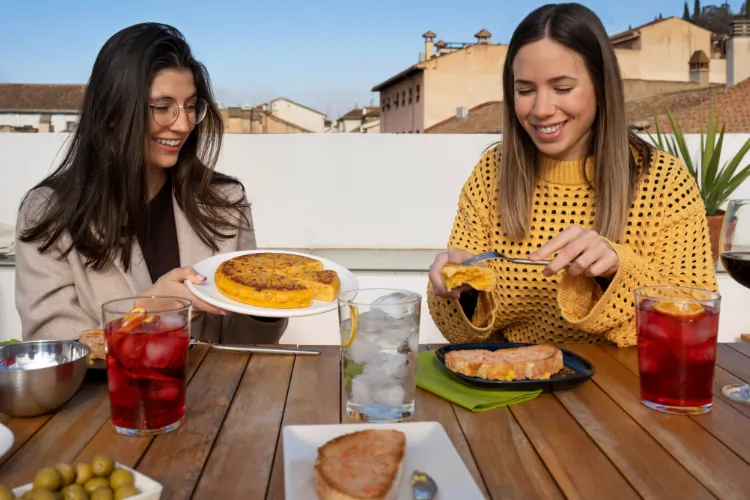
In fact, research shows that the concept of friendship in Spain revolves around spending time together in casual, familiar settings, not just in formal occasions. The more often you engage in small talk or casual greetings, the more natural friendship becomes.
Feeling Belonging Through Spanish in Madrid
When you move to a new country, feeling at home can take time. But in Madrid, Spanish helps you feel connected quickly. It’s not about “mastering the language” immediately; it’s about becoming part of the rhythm of the city.
In Madrid, language helps you transition from functional communication (like asking for directions) to genuine connections. It’s in those moments of casual conversation, where the interaction is not transactional but human. And here’s the thing: Spanish helps people feel included, not just understood.
Take a stroll through Retiro Park or hang out at a neighborhood café, and you’ll hear locals using expressions of belonging: “¡Qué bien verte!” (How nice to see you!). It’s part of Spanish culture, welcoming you into the fold, making you feel like a local.

At LAE Madrid, we help our students learn not just how to speak the language, but how to live it, through emotion, rhythm, and connection. It’s more than just textbooks; it’s about becoming part of the city itself.
Why Spanish is the Key to Feeling at Home in Madrid
Learning Spanish in Madrid is not just about gaining a new skill, it’s about creating connections. Spanish serves as the bridge between you and the city, helping you understand the cultural nuances that make Madrid so unique. You’re not just learning a language; you’re becoming part of the emotional fabric of the city.
In Madrid, people don’t just speak Spanish, they live it. And when you learn to speak Spanish, you’ll experience Madrid in the same way. It will no longer be a city full of strange sounds and unfamiliar routines. It will become a city where you belong, where you feel at home.
LAE Madrid offers immersive courses that help you connect naturally with the city and the people around you.